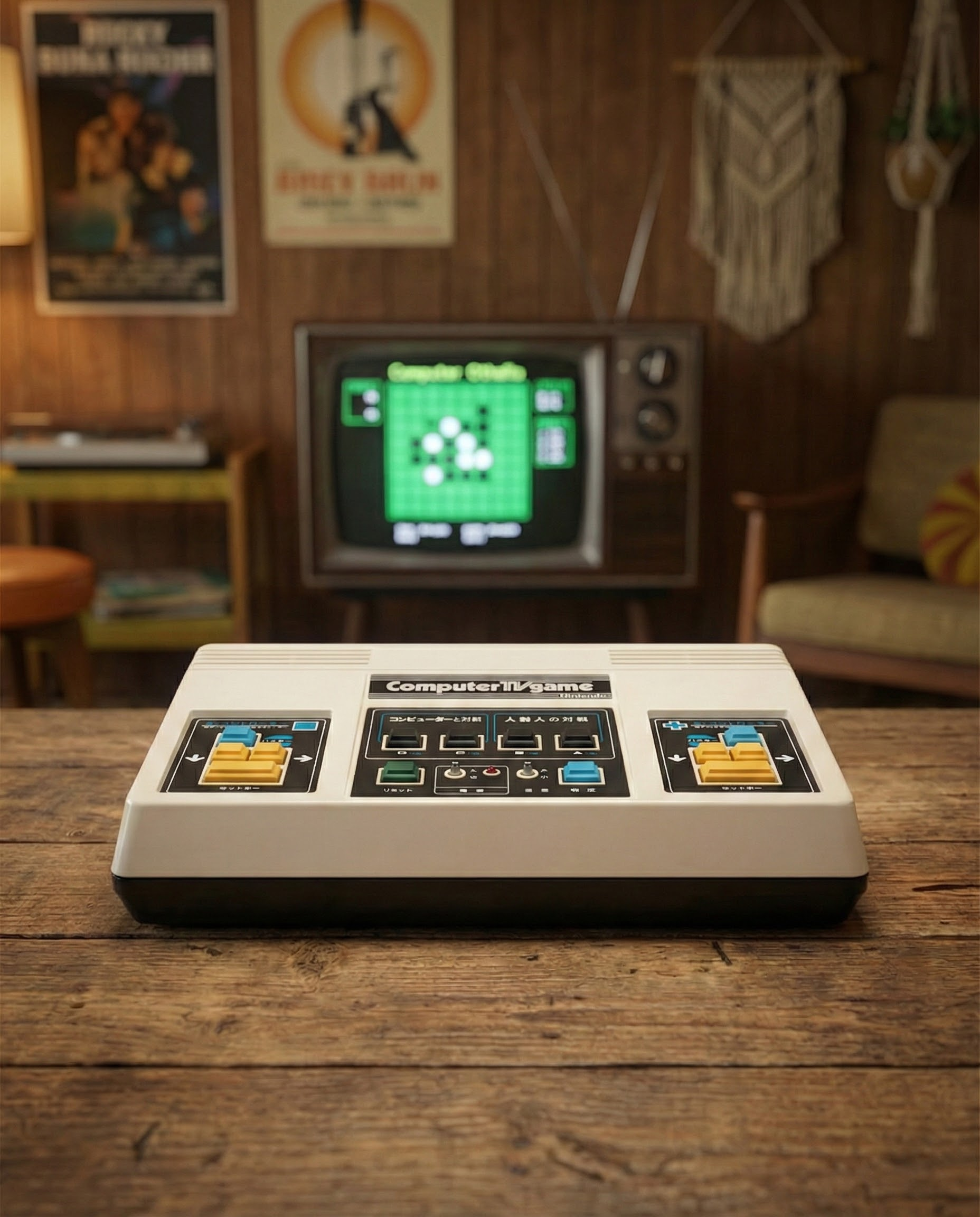
The Computer TV Game (CTG-HC10), released by Nintendo in 1980, represented a significant step in the company's transition from toy manufacturer to video game powerhouse. While not as commercially successful as later consoles, the CTG-HC10 demonstrated Nintendo's early foray into programmable gaming hardware and their ambition to enter the burgeoning home console market. It was a bold move for a company primarily known for playing cards and electronic toys.
The CTG-HC10 allowed users to play a range of simple games via cartridges, demonstrating an early form of game distribution that would become standard in the industry. The console's limited processing power meant that games were graphically simple, but they provided accessible and engaging entertainment for families. It served as a crucial learning experience for Nintendo, informing the design and development of their future, more successful consoles such as the Nintendo Entertainment System (NES). The CTG-HC10's legacy lies in establishing Nintendo's presence in the video game industry and laying the groundwork for their subsequent dominance.
1980
NINTENDO
COMPUTER TV GAME (CTG-HC10)
📜 History & Legacy
⚙️ Specifications
- ❖ CPU: Custom 8-bit processor
- ❖ GPU: Custom graphics chip capable of simple sprite rendering
- ❖ RAM: 2KB
- ❖ Storage: Cartridge based game storage
- ❖ Media: Game Cartridge
🎮 Top 10 Games
- ★ Computer TV Game: Block Kuzushi
- ★ Computer TV Game: Racing Game
- ★ Computer TV Game: Shooting Game
- ★ Computer TV Game: Tennis Game
- ★ Computer TV Game: Baseball Game
- ★ Computer TV Game: Soccer Game
- ★ Computer TV Game: Golf Game
- ★ Computer TV Game: Mahjong
- ★ Computer TV Game: Othello
- ★ Computer TV Game: Darts
💡 Curiosities
- ? Curiosity 1: The CTG-HC10 was only released in Japan.
- ? Curiosity 2: The console's name translates to 'Computer Television Game'.
- ? Curiosity 3: It was one of Nintendo's first attempts at a cartridge-based system.
- ? Curiosity 4: The design was relatively simple compared to later consoles.
- ? Curiosity 5: The console used a standard television as its display.
- ? Curiosity 6: The game library was limited but diverse in terms of gameplay.
- ? Curiosity 7: Gunpei Yokoi was involved in the design and development of the CTG-HC10.
- ? Curiosity 8: It helped establish Nintendo's hardware development skills.
- ? Curiosity 9: The console is considered a precursor to the Famicom/NES.
- ? Curiosity 10: It is a rare and valuable item for collectors.